Founders
Disinterest, or Discomfort?
September 13, 2026
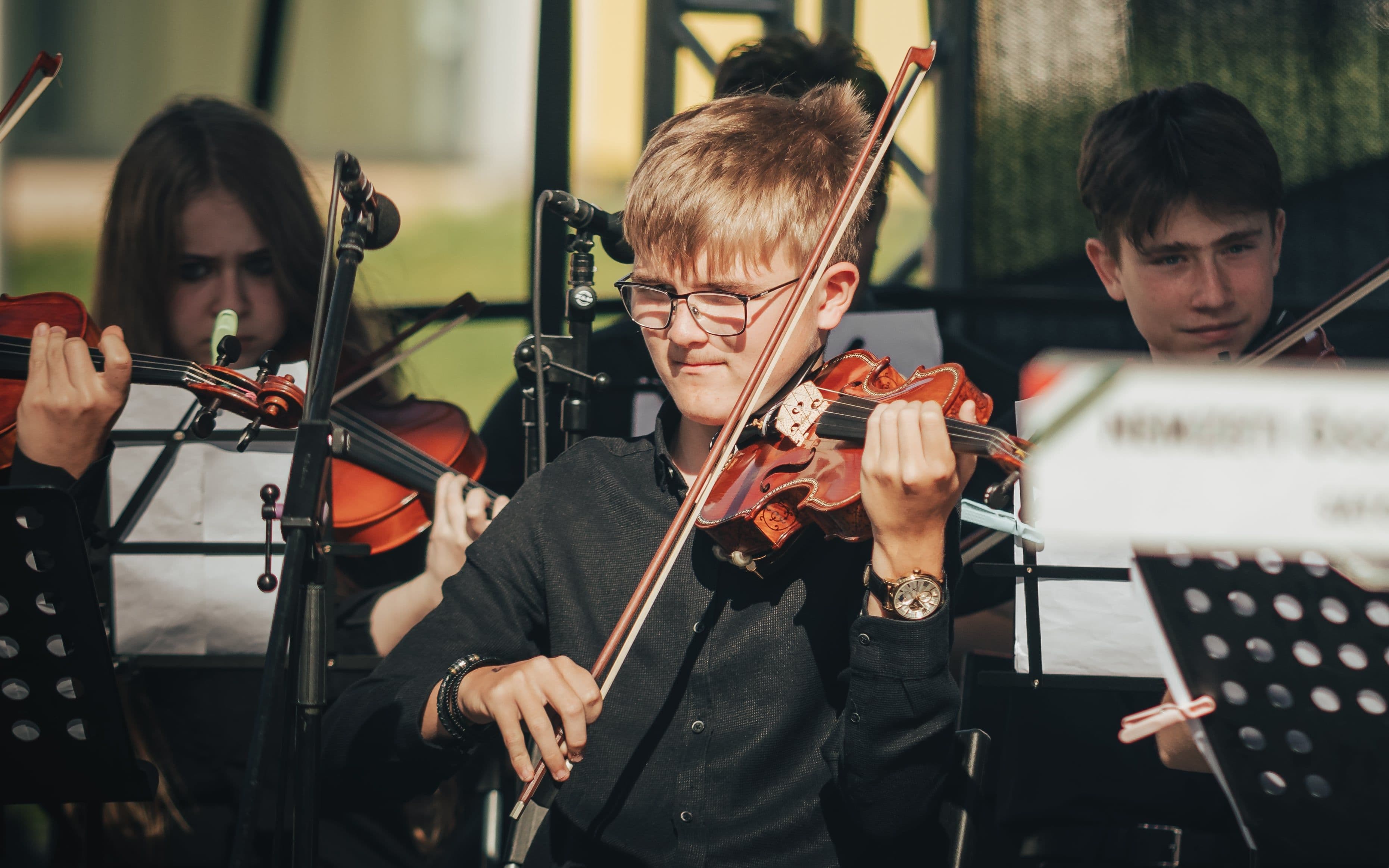
Consider this scenario:
In 1st period, Lucy walks into class and grabs her instrument. At 4'9", her violin fits perfectly, and learning to play in 6th grade has been the highlight of her year. The next year, Timmy decides to join orchestra, full of excitement and ambition. He is assigned the same instrument Lucy used last year, but at 5'9" (he also plays center for the middle school basketball team), the instrument doesn't fit his long, lanky build. What began as ambitious excitement turned into uncomfortable, painful practice, and eventually the reason Timmy doesn't return in 7th grade.
Setup needs are unique to each individual, and therefore challenging to sufficiently address, especially in a resource-constrained environment like the middle school classroom. It simply isn't realistic for a program to have enough variety of shoulder rests, chinrests, and padding (not to mention time) to address the unique needs of each student's setup.
Here's what makes this hard to catch: a student in pain doesn't announce it. Timmy didn't tell anyone his neck hurt. He fidgeted from discomfort during class, seeming distracted. He stopped practicing at home because of the pain it would cause. From the front of the classroom, Timmy looked distracted and unmotivated. But losing interest from lack of motivation can look identical to losing comfort. But only one is actually about the music.
The goal of middle school orchestra is to teach students to learn an instrument, to work as a team, and to develop their brain. When this learning process is blocked by a physical barrier, like a setup problem for Timmy, that goal cannot be achieved, no matter how good the teaching is.
The reason Timmy developed pain was simple: his chinrest was too short. And like we said, no program has the budget or the hours to stock and fit a different chinrest for every body type that walks through the door.
For Embrace, our mission is to break down that barrier.
But what if one chinrest could work for both Lucy and Timmy, without the teacher having to keep stock or swap instruments? What if the student could take control of their own setup, and learn to adjust it to their own changing body (building bodily awareness that improves their musicality along the way)? What if, without the pain, Timmy kept playing violin and chasing his dream?
Music is invaluable in its ability to teach character, develop skill, and provide an avenue for passion. If we can help more students continue their musical journey by knocking down the barriers standing in their way, that is success to us.
Play freely,