Your Setup, Your Way
Adjust your Embrace Strings chinrest for natural posture, comfort, and freedom of movement.
01
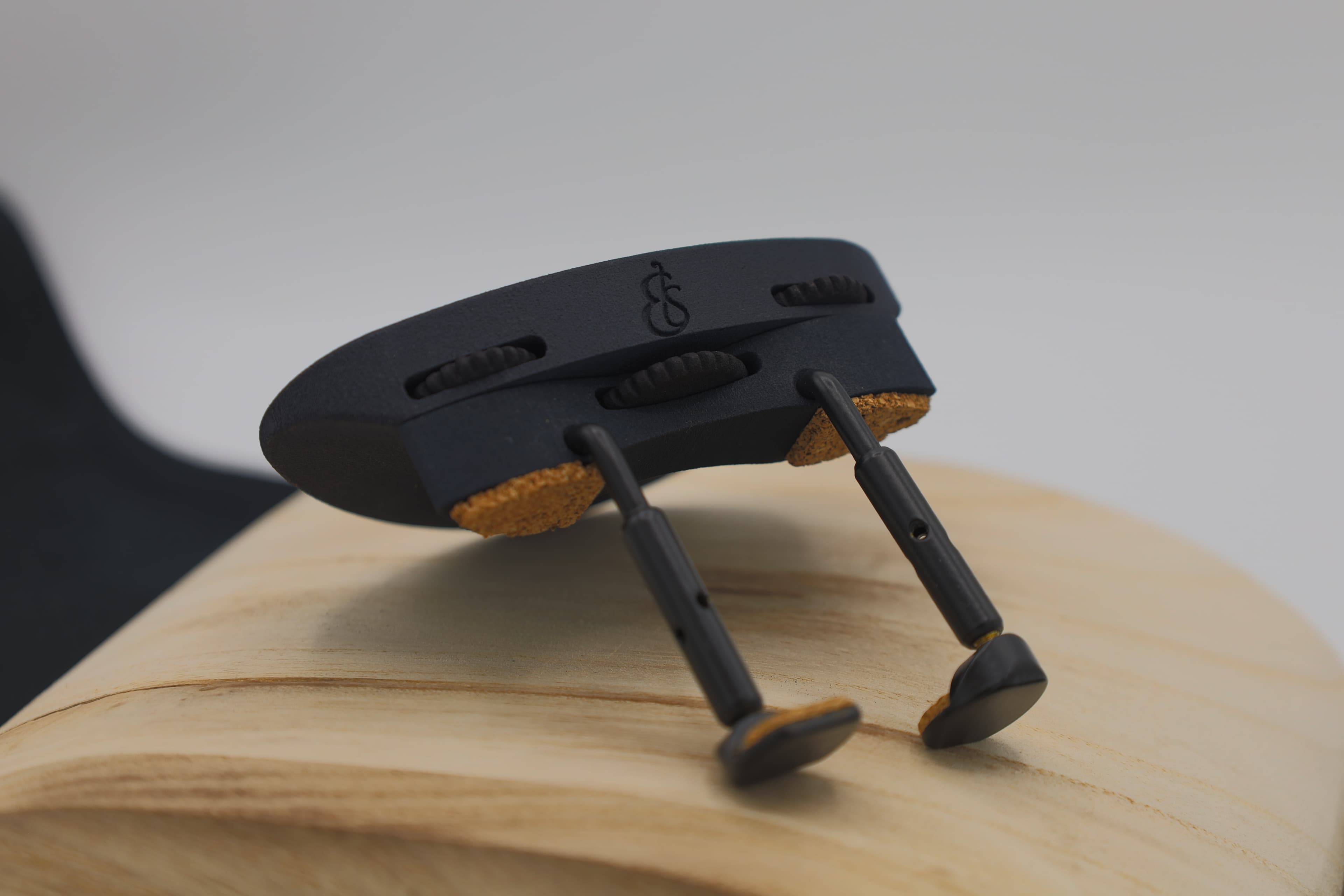
Attach the Chinrest Clamp Barrels
Screw the clamp barrels onto the chinrest.
- These barrels secure the chinrest to your instrument — make sure they are firmly in place before moving on.
02
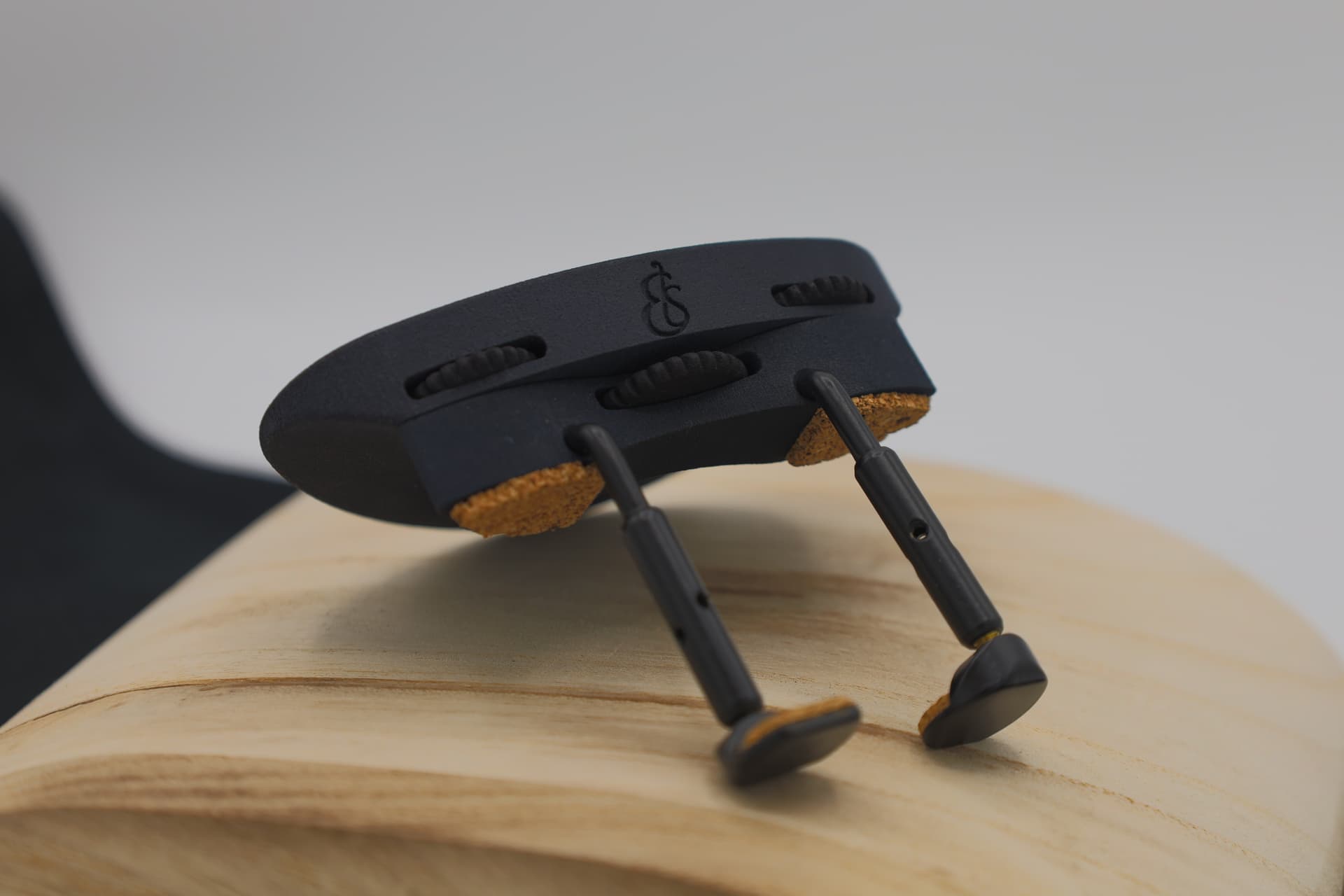
Position and Secure the Chinrest
Place the chinrest to the left of the tailpiece and tighten the clamp using the tightener until snug.
- Don't overtighten — this could damage your instrument. The chinrest should sit firmly but without forcing your instrument.
03
Set Your Shoulder and Instrument
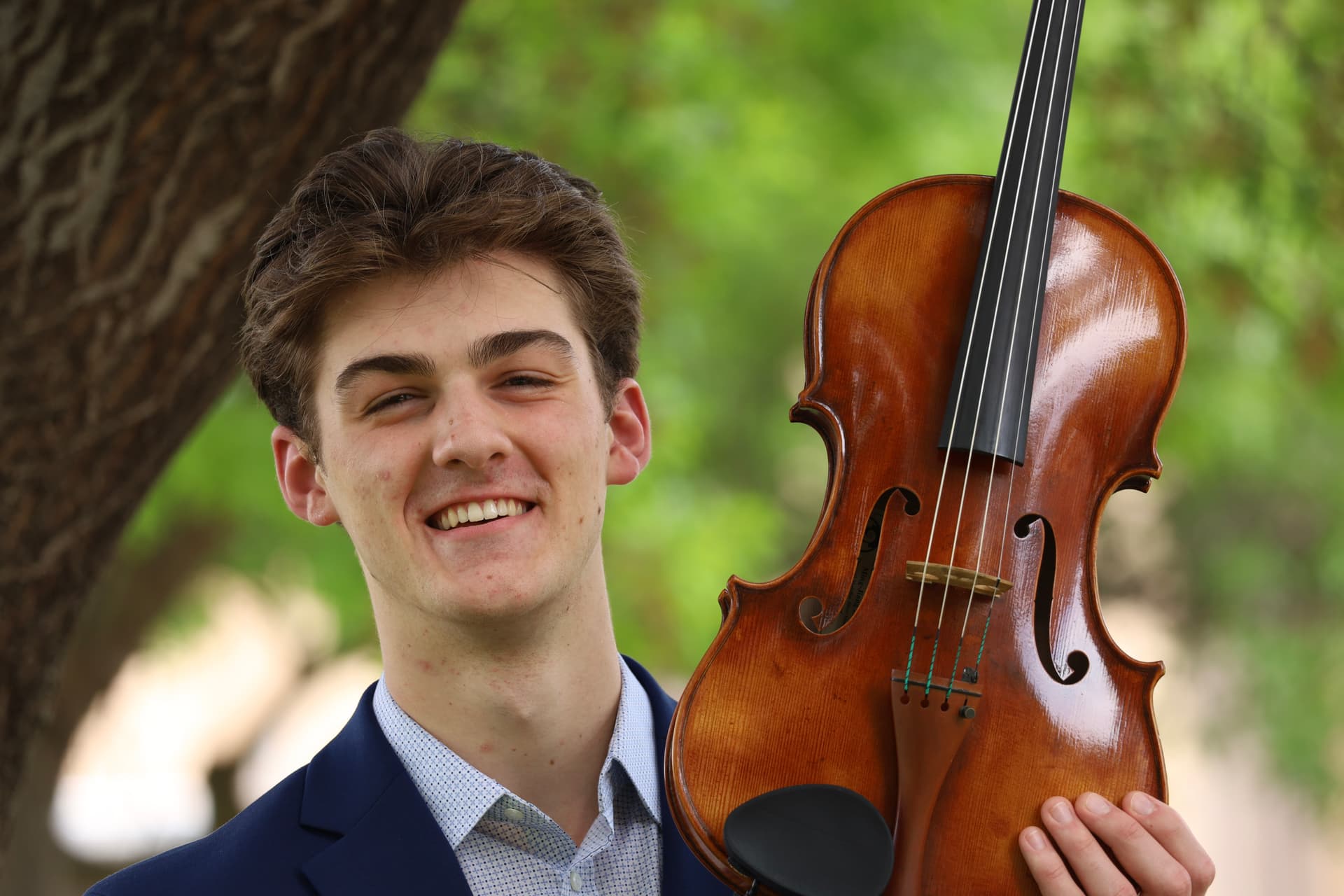
Place your instrument on your shoulder and look straight ahead — don't worry about your chin yet.
- Adjust your shoulder rest so the instrument sits comfortably on your collarbone, coming out at roughly a 45° angle, staying in place with just your shoulder and left hand.
- This ensures your chinrest fills the natural space between your chin and the instrument, rather than forcing your neck into tension.
04
Adjust Height and Tilt
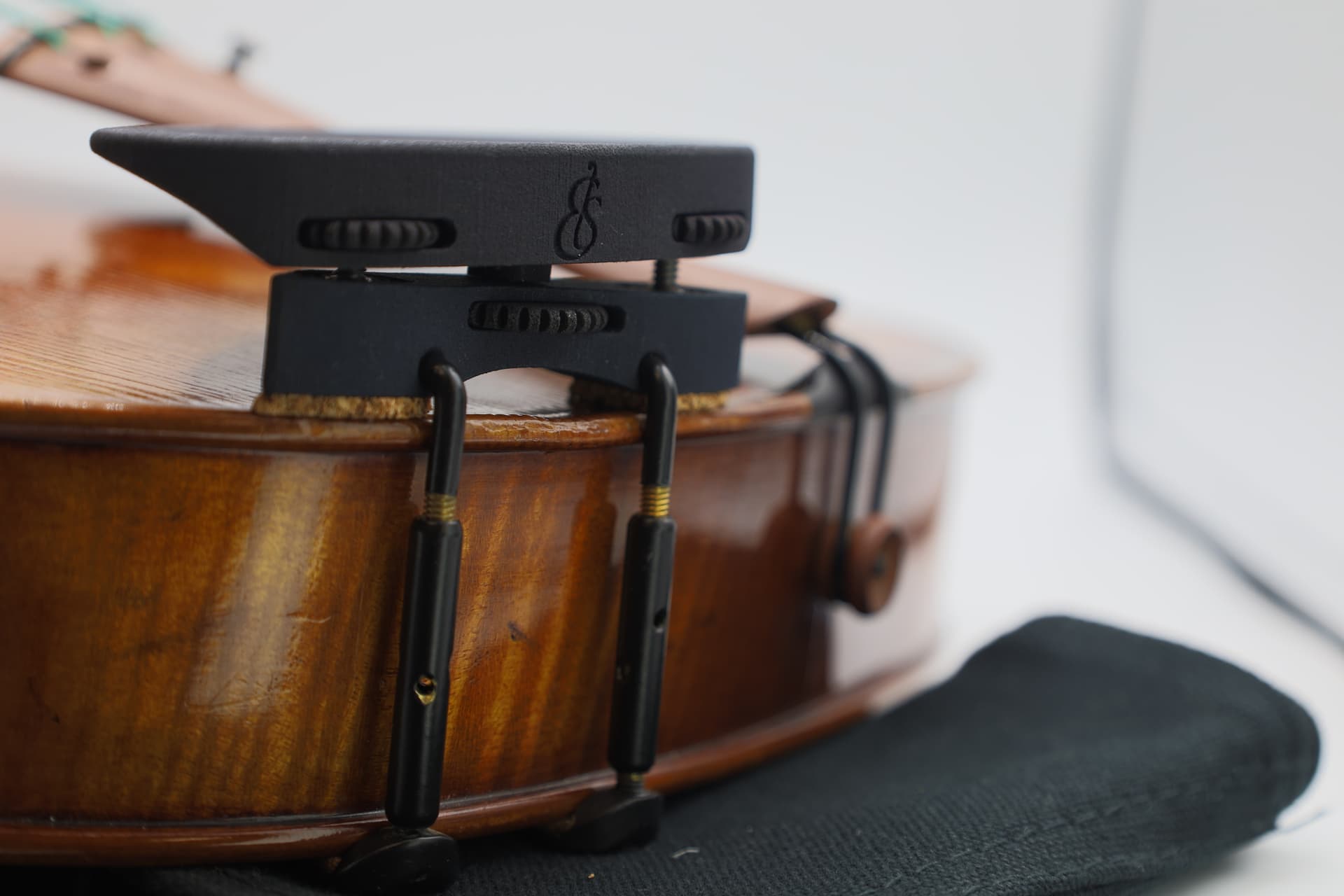
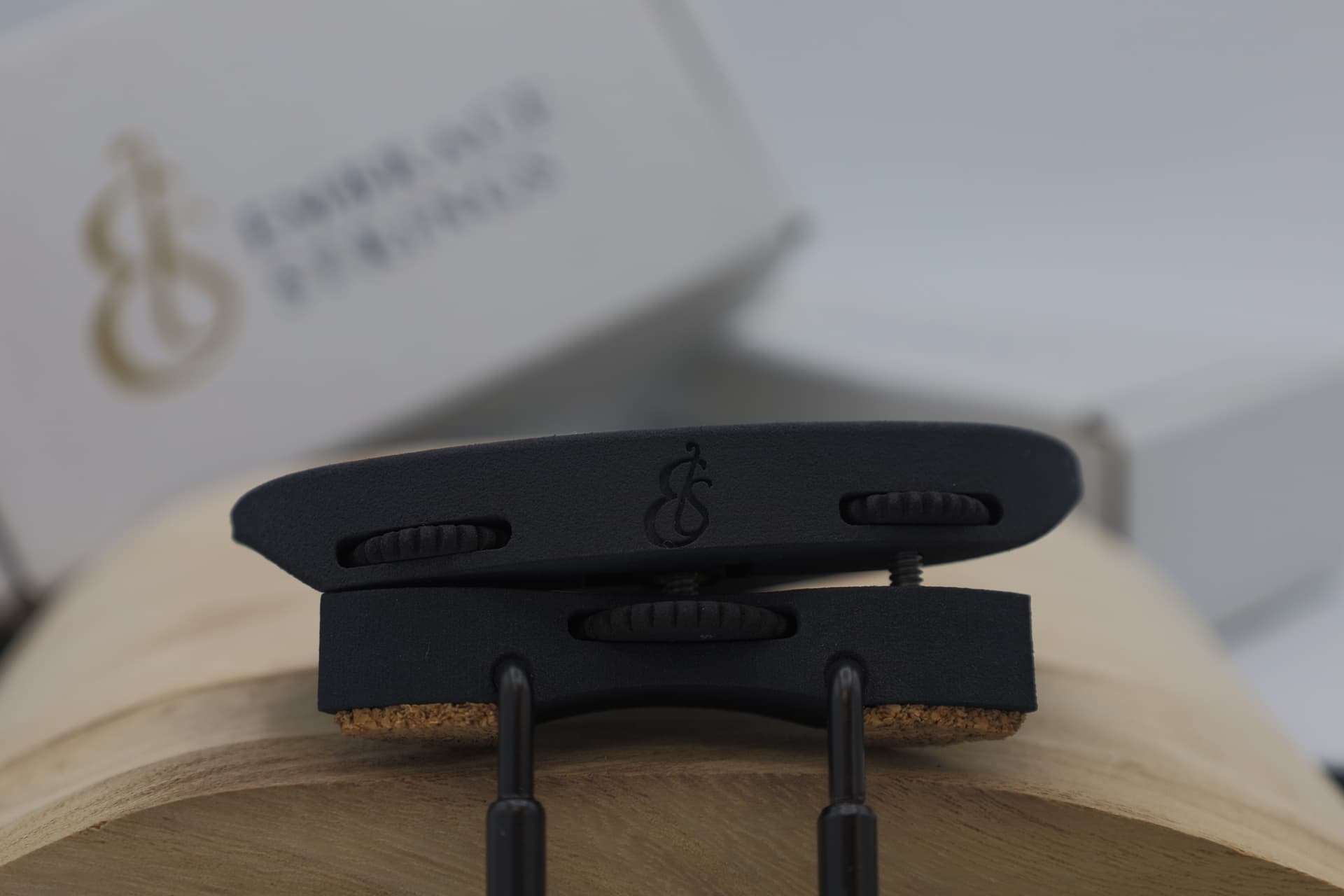
Use the top dials to set the chinrest's height and tilt:
- Fill the gap between your chin and the instrument comfortably.
- Chinrest should be at the same angle as your jawline.
- Ideally, it rests about 2 fingers below your head, allowing your head's natural weight to help secure the instrument.
- Think of the chinrest as a pillow for your jaw, helping you Embrace the instrument.
05
Lock the Chinrest in Place
Use the center dial to stabilize the chinrest — turn until it cannot easily rotate.
- You do not need to overtighten — firm is enough.

06
Tips and Troubleshooting
If the top part of the chinrest comes off, simply pull it back down onto the threaded rod and retighten the top dial.
- Always unlock the center dial before making further adjustments.
- After playing, it's best practice to unlock the center dial to prolong the life of your chinrest.

Free Consultation
Setup Struggles?
Book a free 15-minute video consultation with Turner. We'll look at your setup together and find a path toward pain-free playing.